
Unetwork (Formerly Unity Nodes): The Complete Guide
Everything you need to know about Unetwork, how it works, what you earn, and how to get started.
Unetwork (formerly Unity) turns everyday smartphones into a global verification grid for telecommunications. People install the Unetwork app, run controlled tests that surface real issues in live networks, and earn from service fees that carriers and enterprises actually pay. The work is useful, not speculative, and each result is backed by cryptographic proofs for transparency.
This guide is your practical map. We explain the full architecture from phones at the edge to validation and the on chain audit trail. We break down rewards, the split between license operators and ecosystem pools, and exactly what you receive when you buy a Unetwork Node.
You will learn how Unetwork Licenses work, how to operate or lease them, what the monthly credit costs look like, and how payouts and settlement function. Whether you want to operate a few licenses, build a small lease network, or simply understand how Unetwork fits alongside World Mobile, this article gives you the clarity to move forward with confidence.
source: unetwork.io/media-kit
How Unetwork Nodes Operate
Unetwork is a multi carrier, multi country mobile edge network that rewards people for verifying the global telecom grid. Phones run controlled test calls and checks that document faults. Proofs and critical metadata are hashed to chain for auditability, and service fees from customers fund rewards for participants.
How the System Works End to End
- At the edge: Unetwork License Operators place a call from inside the Unetwork app. The call verifies parts of the telecom grid. Your carrier bill is not involved.
- Validation: Unetwork infrastructure confirms device integrity and that work is genuine.
- On chain record: Detected issues are logged with a cryptographic hash to World Mobile Chain. Carriers can view proofs and reports over API.
- Rewards: Service fees flow to operators according to the reward design.
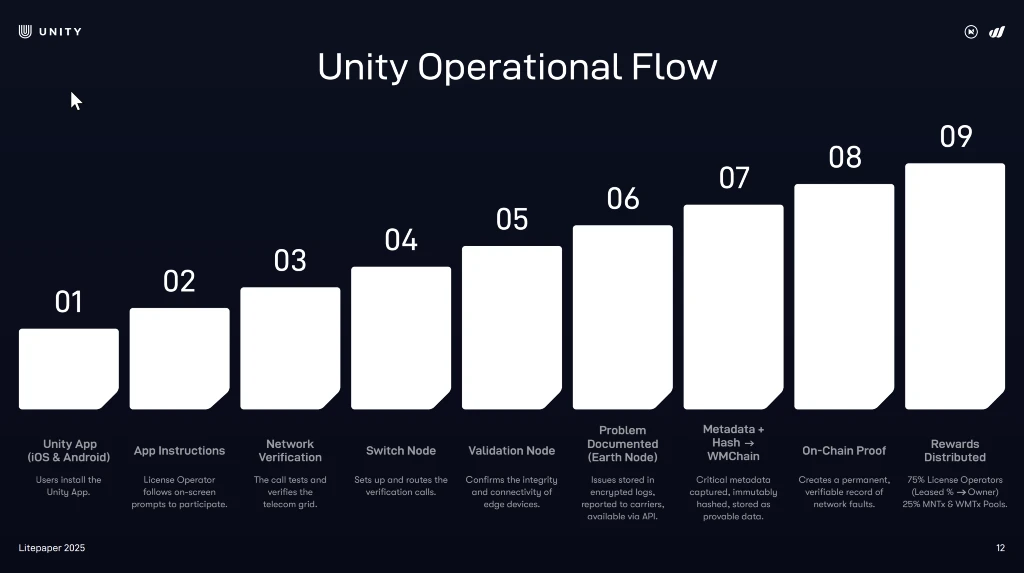
source: Unetwork Litepaper 2025
Roles of Switch, Validation, and Earth Nodes
| Role | What it does | Why it matters |
|---|---|---|
| Switch Nodes | Manage initiation and routing of verification calls and provide capacity | Deliver the test traffic that powers verification |
| Validation Nodes | Confirm device integrity and availability | Keep rewards tied to authentic work and prevent gaming |
| Earth Nodes | Record issue metadata and hash proofs to chain with carrier and API access | Create a tamper evident audit trail |
Where Rewards Come From and How They Split
Rewards are funded by network service fees paid by carriers, enterprises and governments for verification, fault detection, and quality assurance. Unetwork presents this as a useful proof of work model. No new tokens are minted for the act of rewarding participants.
High level split: 75 percent to Unetwork License Operators doing verified work. 25 percent to ecosystem pools that support MNTx and WMTx operator pools. If a license is leased, a set share flows back to the Node Operator per the digital agreement.
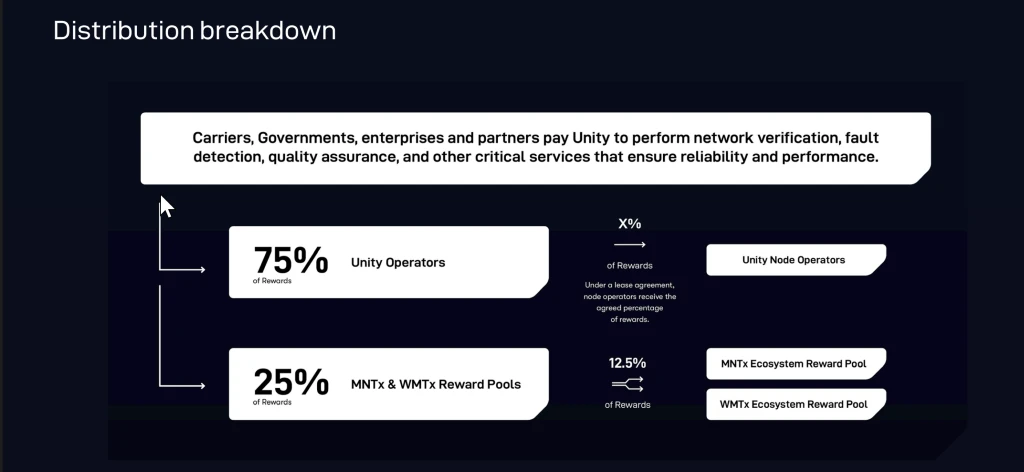
source: Unetwork Litepaper 2025
What You Get When You Buy a Unetwork Node
| Item | Included |
|---|---|
| Availability | 6,000 Unetwork Nodes |
| Price | $5,000 USD per Node |
| Ownership | 1 Unetwork Node NFT, transferable and sellable |
| Licenses | 200 Unetwork License NFTs per Node; transferable and sellable; also leasable |
| Token component | Includes $1,875 USD MNTx + $1,875 USD WMTx locked and staked for 24 months, subject to the token price at purchase time. |
If this guide helped and you decide to buy a Unetwork Node, please consider using the hexynodes referral code at checkout.
Buy Unetwork NodeUnetwork Licenses and the Verification Cycle
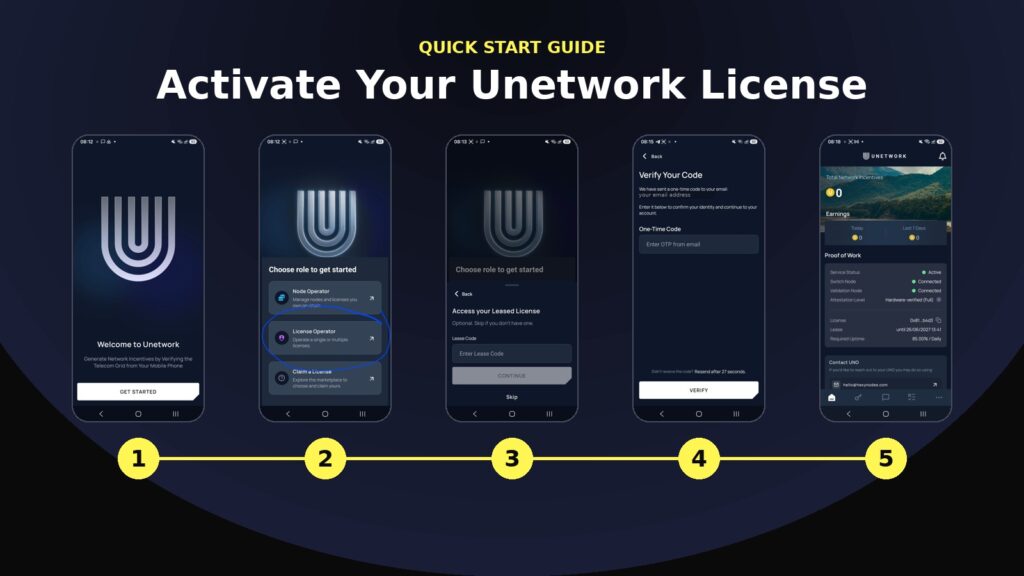
- Activation: Licenses are activated in the app on iOS or Android.
- Credit cost: Credits are typically USD 1.99 to 3.99 per month per license. If a license is not active and connected it is not charged.
- Digital lease: Node Operators can lease licenses. The app records the agreed split and shares operator rewards accordingly.
- Dial, no bill: Calls made inside the app to Unetwork numbers do not show on your carrier bill.
Payouts, Settlement, and Risk
- Settlement: Rewards are withdrawable in partner cryptocurrencies from inside the app. There is no lock on earned rewards.
- Regulation: Learn your local rules for telecom testing and crypto rewards and taxes.
- Execution risk: Results depend on device uptime, fault density in your regions, and how well you deploy or lease licenses.

Who Unetwork Is For
- People who want to operate licenses on their own devices or build a small lease network
- Community builders who can activate many devices across regions
- Carriers and enterprises that want transparent, verifiable QA at scale
Ready to get started? Browse available Unetwork licenses and activate your lease code in under five minutes.
Get a Unetwork LicenseFrequently Asked Questions
What is the difference between a Unetwork Node and a Unetwork License?
How much does a Unetwork Node cost and how many exist?
How are rewards funded and split?
Do Unetwork calls use my personal mobile plan?
What is the monthly cost to keep a license active?
Can I withdraw rewards to different cryptocurrencies?
Sources
- Unetwork Litepaper 2025 (PDF)
- Unetwork official site: unetwork.io
- Unetwork Rewards Flow (PDF one pager)
Looking for a lease code? Our complete Unetwork license directory has available codes ready to activate.
Browse Unetwork Licenses →