AirNode Hosting in Bellingham: A Property Owner’s Guide
If you own a home, a small commercial building, or a rental property in Bellingham, there is a quiet new way to earn from it. AirNode hosting lets you put a small wireless radio on your roof and get paid by the people who use the network it powers. No tenants, no leases through a property manager, no monthly invoicing. Just a small piece of equipment, a power outlet, and a view of the sky.
This guide is written for Bellingham property owners who want to understand what AirNode hosting actually involves before signing up. We will cover what an AirNode is, what kinds of buildings work, how much you can realistically earn, what the install looks like, and the local realities of doing this in the Pacific Northwest. By the end you should have enough information to decide whether your roof is a fit, and what your next step would be.
What an AirNode Actually Is
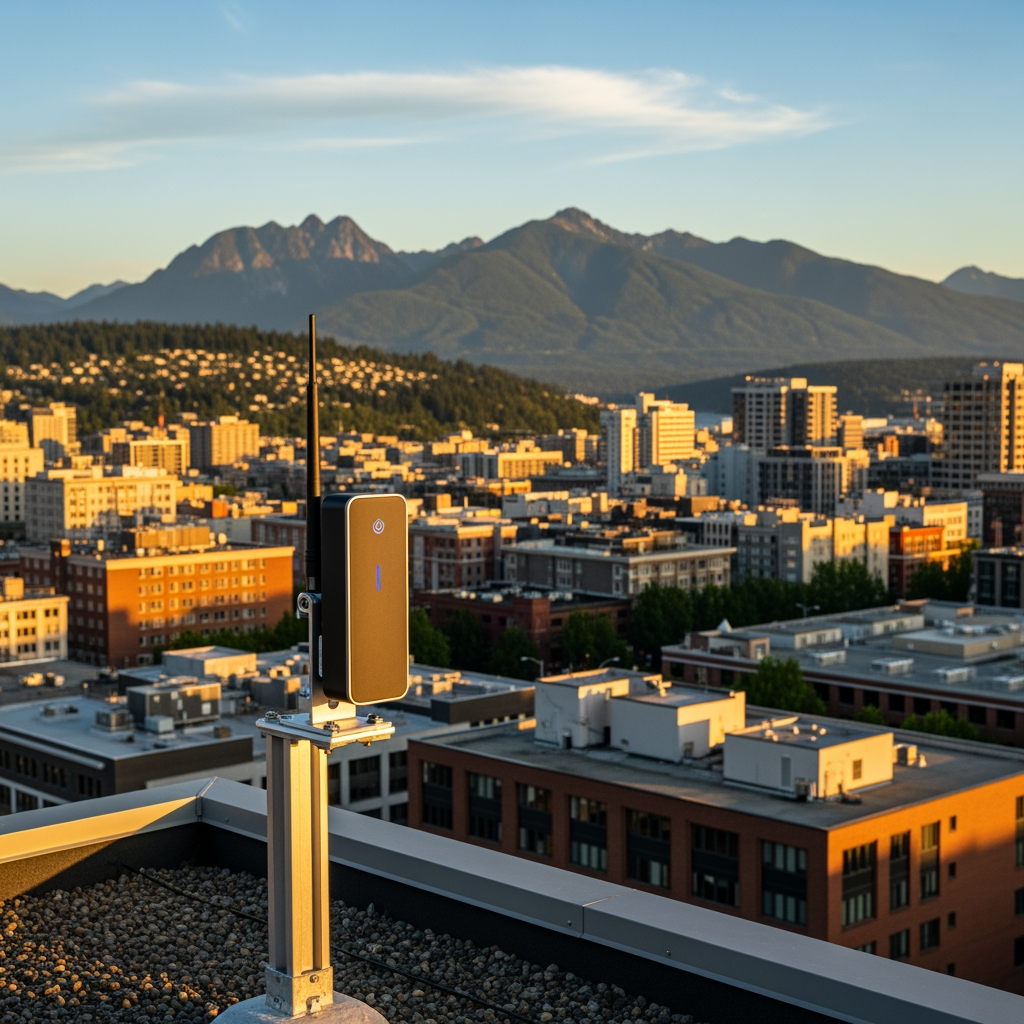
An AirNode is a small wireless radio, usually about the size of a shoebox or a small briefcase, that delivers mobile phone service to people in its coverage area. It connects to the World Mobile network, which is a real licensed mobile carrier operating in the United States. When someone in range of your AirNode uses their phone for calls, texts, or data, your radio carries part of that traffic, and you earn a share of the revenue that the network collects.
The way to think about it is this: traditional mobile networks are built by giant carriers who put up cell towers on commercial sites, leased from a small group of property owners. World Mobile flips that model. Instead of a few big towers, the network is built from thousands of smaller radios hosted by everyday property owners. Your roof becomes part of the infrastructure. Subscribers in Bellingham get coverage. You get a cut.
This is not a Wi-Fi router and it is not a hotspot. It is a piece of regulated wireless infrastructure operating on licensed spectrum, installed and maintained by trained technicians. The hardware itself is provided by World Mobile or its hardware partners, not purchased separately by the host.
Why Bellingham Is a Good Fit
Bellingham sits in a useful spot for this kind of network. It has a real downtown, dense neighborhoods like Fairhaven and the South Hill, a major university driving foot traffic, a port, and a steady flow of tourism in the summer. It also has gaps in mainstream carrier coverage. Anyone who has driven from Bellingham toward Mount Baker or along Chuckanut Drive knows there are dead spots that the big carriers have not bothered to fix.
Those gaps are exactly what AirNodes are designed to fill. A network of small rooftop radios distributed across the city can deliver more consistent coverage than a few distant towers, especially in the kinds of neighborhoods where Bellingham residents actually live. The HexyNodes operation is building exactly this network across seven hexagonal zones covering Bellingham proper and parts of Whatcom County, with a target of seven thousand local subscribers.
That target matters for hosts. The more subscribers using the network in your zone, the more your AirNode earns. Bellingham is not a guess; it is a deliberate buildout with real numbers behind it.
What Kinds of Bellingham Properties Work
The short answer is most of them. The slightly longer answer depends on what kind of building you have, what your roofline looks like, and what is around you. Here is how the most common Bellingham property types stack up.
Single Family Homes
The classic Bellingham single family home, whether a Craftsman in Sehome, a postwar ranch in Birchwood, or a newer build in Cordata, is generally a strong fit. What matters is the roof. A two story house with an unobstructed view in at least two directions is ideal. The radio gets mounted on the highest stable point, usually near a chimney or roof peak, with a clear sight line over the immediate neighborhood. Cedar shake, composite shingle, and metal roofs all work; the install crew uses non-penetrating mounts where possible to avoid roof damage.
Homes with very large evergreens directly overhead are harder to make work. Bellingham is full of mature Douglas fir and western red cedar, and a tree taller than your house can block the radio’s signal in one or more directions. This does not disqualify your property automatically, but it does mean the install crew may recommend a different mounting location or a higher pole.
Commercial Buildings Downtown
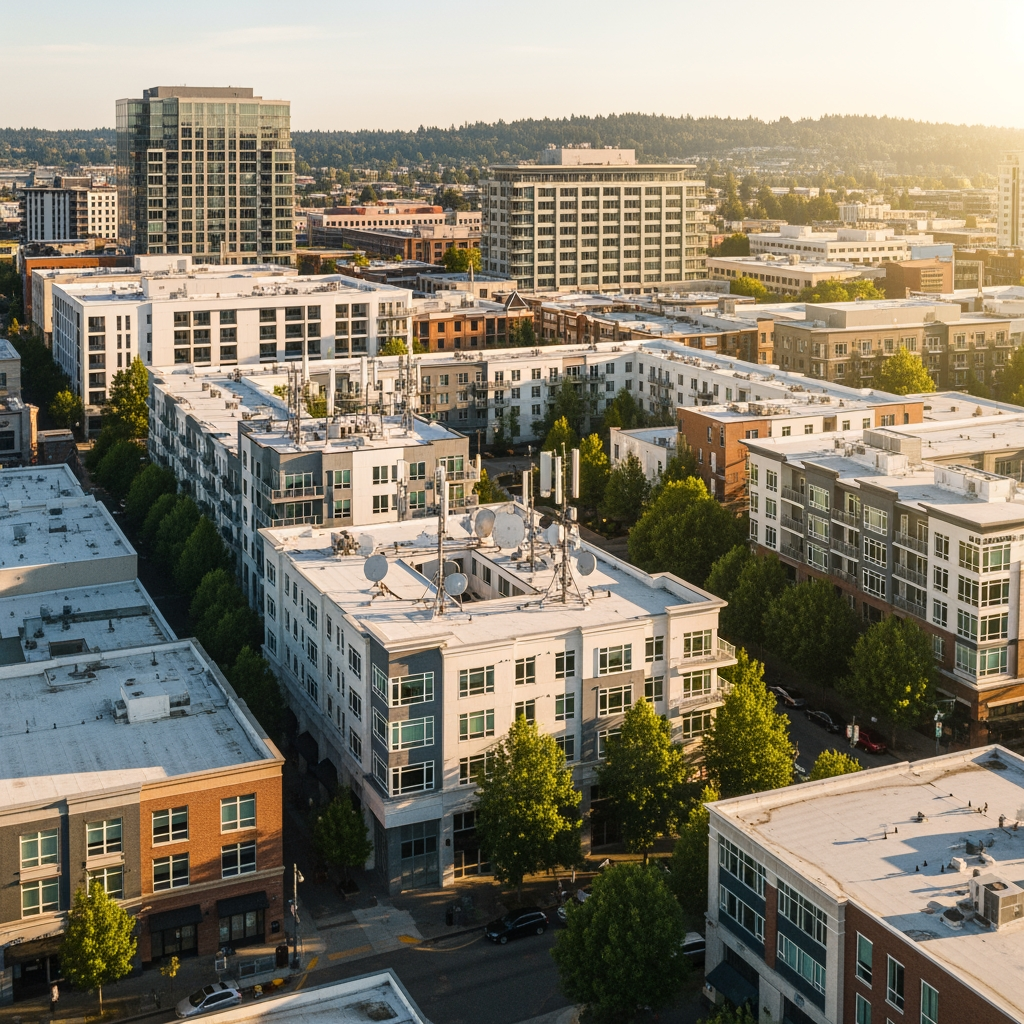
Two and three story brick buildings along Holly Street, Railroad Avenue, and the Fountain District are excellent candidates. They tend to have flat roofs, easy access, and great sight lines across downtown. If you own one of these buildings, or if you are a tenant who can negotiate roof access with the owner, this is one of the best possible setups for an AirNode. A single radio on a downtown rooftop can serve hundreds of subscribers in the surrounding blocks.
Apartment and Condo Buildings
Multi-unit buildings can be excellent hosts because they are usually taller than single family homes around them. The complication is that the host has to be the building owner or have explicit written permission from the HOA or property management company. Individual condo owners cannot install on a shared roof without authorization. If you own a small four-unit or six-unit building outright, this is a great use of your roof. If you live in a larger HOA-governed building, it is worth raising at a board meeting.
Detached Garages, Workshops, and Outbuildings
If your main house is not a fit but you have a tall outbuilding, that can work too. A two story garage, a workshop, or even a tall pole barn on a rural property can host an AirNode just fine. The requirements are the same: stable structure, power, and sight lines.
Rental Properties
If you are a Bellingham landlord, AirNode hosting is a clean revenue add-on that does not affect your tenants’ day to day life. The radio is on the roof, not in their unit. It uses minimal power, makes no noise, and most renters will never know it is there. Some landlords share a small portion of the AirNode earnings with tenants in exchange for cooperating with the install; this is optional but a nice touch.
The Pacific Northwest Realities
Hosting infrastructure in Bellingham is not exactly the same as hosting it in Phoenix or Dallas. The local climate creates a few specific things to think about, none of them deal-breakers, but worth knowing.
Marine Air and Salt Corrosion
Bellingham is on Bellingham Bay, and properties west of Interstate 5 get a steady supply of marine air. The hardware used in AirNodes is rated for outdoor use in coastal conditions, with sealed enclosures and corrosion-resistant mounting hardware. This is not something you have to worry about as a host, but it is worth knowing that the equipment is built for it.
Rain, Wind, and Moss
The Pacific Northwest gets famously wet weather. Equipment ratings handle the rain easily. Strong winter wind storms, the kind that take out power along Lake Whatcom Boulevard every few years, are a bigger concern, and the install crew will choose a mount that survives a normal storm season. Moss is another local quirk; if your roof is heavily mossed over and overdue for a cleaning, the install team will note it but will usually still proceed. Long term, moss does not affect the radio.
Tree Canopy
The biggest local factor is trees. Bellingham is a green city, and most neighborhoods are heavily wooded. Tall conifers can block wireless signal far more than deciduous trees. The good news is that wireless radios at this scale do not need a perfectly clear horizon; they need clear sight lines in the directions where subscribers actually live. The install team uses a coverage planning tool to evaluate this before quoting your site.
How Much You Can Earn
This is the question every property owner asks first. The honest answer is that earnings depend on three things: the model of AirNode installed, how many subscribers are in your coverage area, and how much they use the network. There is no fixed monthly rent like a cell tower lease.
Here is a realistic earnings range based on current World Mobile economics, expressed as approximate monthly amounts in US dollars. These are not guarantees; they are illustrative ranges built from network economics that World Mobile publishes for hosts.
| Coverage Area | Approx Subscribers in Range | Estimated Monthly Earnings |
|---|---|---|
| Quiet residential street | 10 to 30 | $15 to $60 |
| Active residential block | 30 to 80 | $60 to $150 |
| Mixed use neighborhood | 80 to 200 | $150 to $350 |
| Downtown rooftop | 200 to 500 | $350 to $800 |
| High traffic corridor | 500+ | $800+ |
For comparison, a traditional cell tower lease pays around $1,000 to $3,000 per month, but those leases are nearly impossible to obtain unless you own a large industrial parcel or a tall building in a strategic location. The big carriers already have their towers placed and they are not adding many new ones. AirNode hosting is the accessible version of that same economic model, scaled down to fit normal residential and small commercial properties.
Earnings grow as more local subscribers join the network. In the early phase of the Bellingham buildout, when the subscriber count is still climbing toward the seven thousand target, individual AirNode earnings will be on the lower end of these ranges. As subscribers grow, the same radio earns more without any change to the installation.
Want to see what your specific roof could earn?
The HexyNodes team will run a free coverage and earnings estimate for your address.
Get a Free Site EstimateWhat the Install Looks Like
If you decide to move forward, the process is straightforward. There are five basic steps, and the whole thing usually takes a couple of weeks from initial contact to a working radio on your roof.
Step One: Initial Conversation
You reach out, share your address and a few details about your property, and the team confirms that your zone is in the active buildout area. This takes one short email or a five minute phone call.
Step Two: Site Survey
A local technician comes out to look at your roof. This is free. They check sight lines, evaluate the structure, identify the best mounting location, confirm power access, and run the location through the coverage planning tool. You get a written summary including the estimated coverage and earnings range for your specific site.
Step Three: Host Agreement
If you want to proceed, you sign a host agreement. This is a simple document covering things like access for installation and maintenance, equipment ownership (the radio belongs to the network operator, not to you), and how earnings are paid out. It is shorter and simpler than most rental leases.
Step Four: Installation
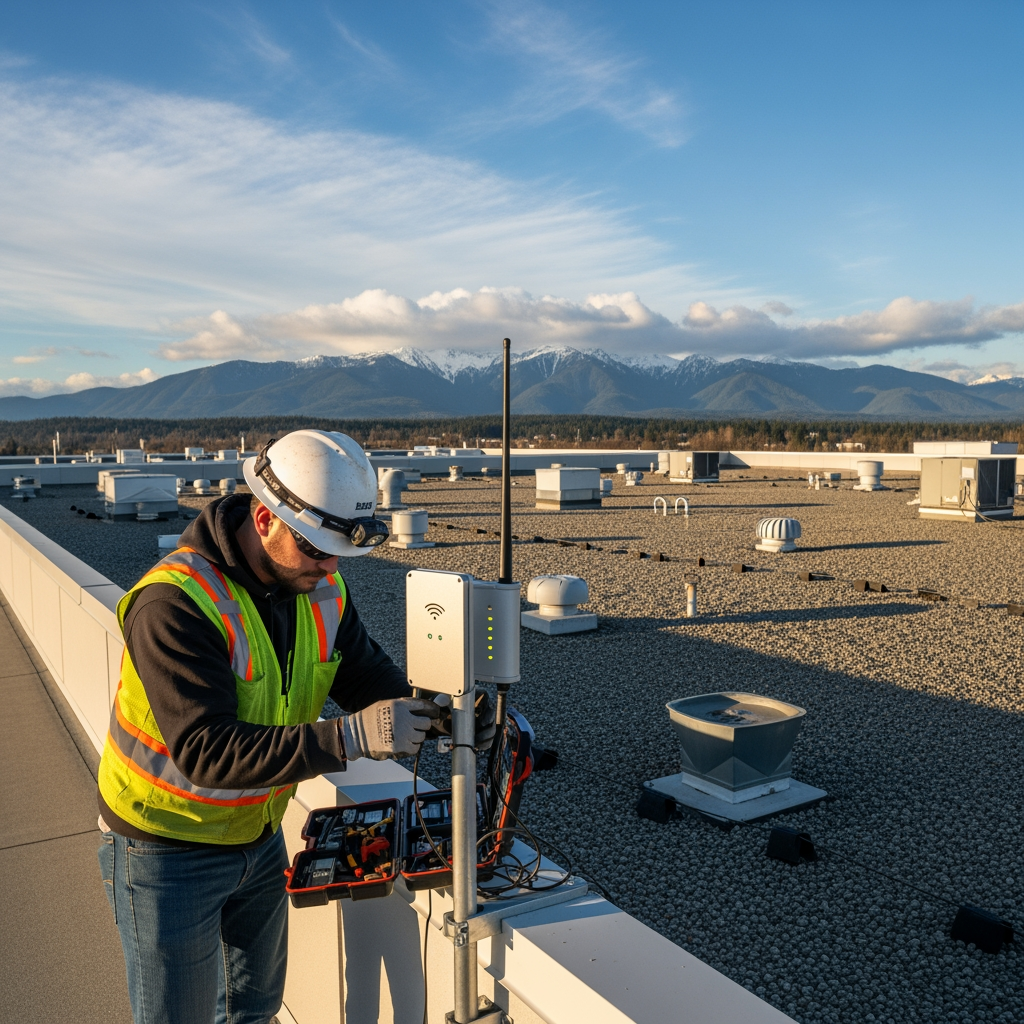
A two person crew installs the radio, runs power and a small data cable to the unit, and brings it online. Most installations take a half day. You do not need to be home for the actual roof work, but someone should be available to provide power access. The install is performed by trained crews following standard safety practices.
Step Five: Going Live and Earning
Once the radio is online, it shows up in the network and immediately starts handling traffic from any subscribers in range. Your earnings begin accruing right away. Payouts are processed monthly, paid directly from World Mobile to the host, with full transparency on how the numbers are calculated.
Things Property Owners Always Ask
Does It Affect My Insurance?
Most homeowners’ policies are not affected because the equipment is owned by the network operator, not by you, and is professionally installed. Some carriers may want to be notified that there is a small piece of communications equipment on the roof; if so, the install team can provide an installation summary for your records. This is similar to having a satellite dish or a solar inverter on your roof, both of which are routine.
Will My HOA Allow It?
If you live in an HOA-governed building or community, you should check the rules before signing. Most HOAs allow small communications equipment, especially when it is unobtrusive and professionally installed. Some require written approval first. The install team can provide documentation describing the equipment, the install method, and the visual impact, which makes the HOA conversation easier.
What About Property Taxes?
The radio is not yours, so it does not become part of your property’s assessed value. Your earnings are taxable as income, just like any other side income. World Mobile issues the relevant tax forms at year end. If you are doing this as part of a larger Network Builder partnership through HexyNodes, your tax situation may have additional optimization opportunities; we can connect you with a CPA who understands the model.
Is There Any Up Front Cost?
For standard residential hosting, no. The equipment is provided, the installation is provided, and there is no signup fee. You provide the roof and the power outlet. Some larger commercial setups, especially those involving multiple radios on a single building, may have shared cost arrangements; those are negotiated case by case.
How Much Power Does It Use?
A typical AirNode draws roughly the same power as an LED light bulb that runs continuously, somewhere around eight to fifteen watts. Your monthly electricity cost from hosting is in the range of one to three dollars. This is included in the earnings model, not added on top of your bill.
Why Now
The Bellingham network is in its early growth phase, which is the best possible time to become a host. Early hosts are placed in strategic locations first, get priority on the best subscriber zones, and benefit most from the milestone bonuses tied to the network’s growth. Once a zone has enough coverage, additional hosts in the same area are still welcome, but they do not receive the same level of placement attention.
This is also a moment when the alternative is not great. Bellingham property owners who have looked into traditional cell tower leases know that the big carriers are not adding new sites. AirNode hosting is the only practical way for a normal property owner to participate in the economics of mobile infrastructure.
If you are curious how this fits into the larger picture of how World Mobile is built, our companion piece on EarthNode operators walks through the validator side of the network. AirNodes deliver the wireless connection at the edge; EarthNodes handle the routing and authentication that makes the network actually work. Together they form a real, functional mobile network, owned and operated by the people who live in the places it covers.
Frequently Asked Questions
How long does the host agreement last?
What if I sell my house?
Can I have more than one AirNode on my property?
Does the radio interfere with anything in my home?
What if the network does not grow as expected?
Who handles maintenance?
Can I host an AirNode if I am a renter?
How does this compare to becoming a Network Builder agent?
Ready to find out if your Bellingham property is a fit?
Free site survey, no obligation, and a written earnings estimate based on your specific location.
Request a Free Site SurveyThinking about owning one instead of hosting? Our guide to World Mobile AirNode models and prices compares the EmberNode, Frontier, Apex, Link, Portal, and Titan side by side.