
What Is a World Mobile AirNode?
An AirNode is a physical wireless radio that anyone can own. It provides real mobile and internet coverage in your area, and you earn rewards for every subscriber it serves. You buy it, a professional team installs it, and you manage everything from your dashboard.
Availability moves between drops. Only the EmberNode is open to buy on demand right now.
Lineup, prices, and reward rates last verified 23 August 2026 against World Mobile’s published figures. Models get renamed, repriced, or restricted to partners between drops, so we re-check this page every drop.
How Do AirNodes Actually Work?
AirNodes work like small cell towers that you own. You purchase one, a professional team installs it at a suitable host location, and it broadcasts wireless coverage to nearby phones. When people connect and use data, make calls, or send texts through your AirNode, you earn rewards from the network. You never need to visit the site or touch any hardware.

Buy Your AirNode
Choose a model that fits your budget and goals. Prices start at $165 for an EmberNode and $585 for a Frontier.
A Host Provides the Location
Every AirNode is installed at a host site by a professional team. You can be the host yourself or partner with one.
You Earn Remotely
Manage everything from your dashboard. Earn rewards as subscribers connect through your AirNode’s coverage area.
How Much Does a World Mobile AirNode Cost?
World Mobile AirNodes cost between $165 and $15,999 depending on the model, and the cheapest way in is the $165 EmberNode. These are the current prices, last verified on 23 August 2026:
- EmberNode$165Fiber distribution gateway in Pakistan. Drops to $150 per node from 11 units and $145 from 150 units. Earns about $0.0042 per GB of traffic carried.
- Frontier$585 – $1,950Wi-Fi AirNode for the Philippines rollout, sold in four tiers: Core $585, Plus $750, Pro $1,000, Max $1,950. Pays a fixed monthly base reward of $17.55, $22.50, $30, or $58.50.
- Link$749Fixed wireless receiver at a US home or business, or $699 on the Early Access Whitelist. Earns subscriber based rewards.
- PortalFrom $9,000CBRS cellular radio delivering real LTE service to smartphones in its coverage area.
- Apex$15,999Long range broadcast unit with about 30 km of line of sight, serving up to 250 Link receivers.
- TitanContact salesBand 71 macro base station for enterprise deployments. World Mobile prices these directly with the buyer.
- SparkPartner onlyNo longer sold to the public. Available to World Mobile distribution partners.
- PulseNot yet pricedRepositioned as World Mobile’s first energy infrastructure node. Specification and pricing not published.
Every package includes hardware, software, licenses, first year hex fees, and first year insurance. Buyers using the Hexynodes code FGWGVP take 10% off a first order of 1 to 10 AirNodes. Prices are World Mobile’s published figures and change between drops.
Get 10% Off Your First AirNode Order
Buy through Hexynodes and World Mobile takes 10% off your first order of 1 to 10 AirNodes. Use the code at checkout on World Mobile’s official AirNode platform, or just follow our link and it is applied for you.
All 8 World Mobile AirNode Models Across 3 Regions
From a $165 fiber gateway in Pakistan to an enterprise macro base station, each model is purpose built for its region and earns rewards differently. Availability moves: some models sell continuously, others only in timed drops that sell out in minutes.
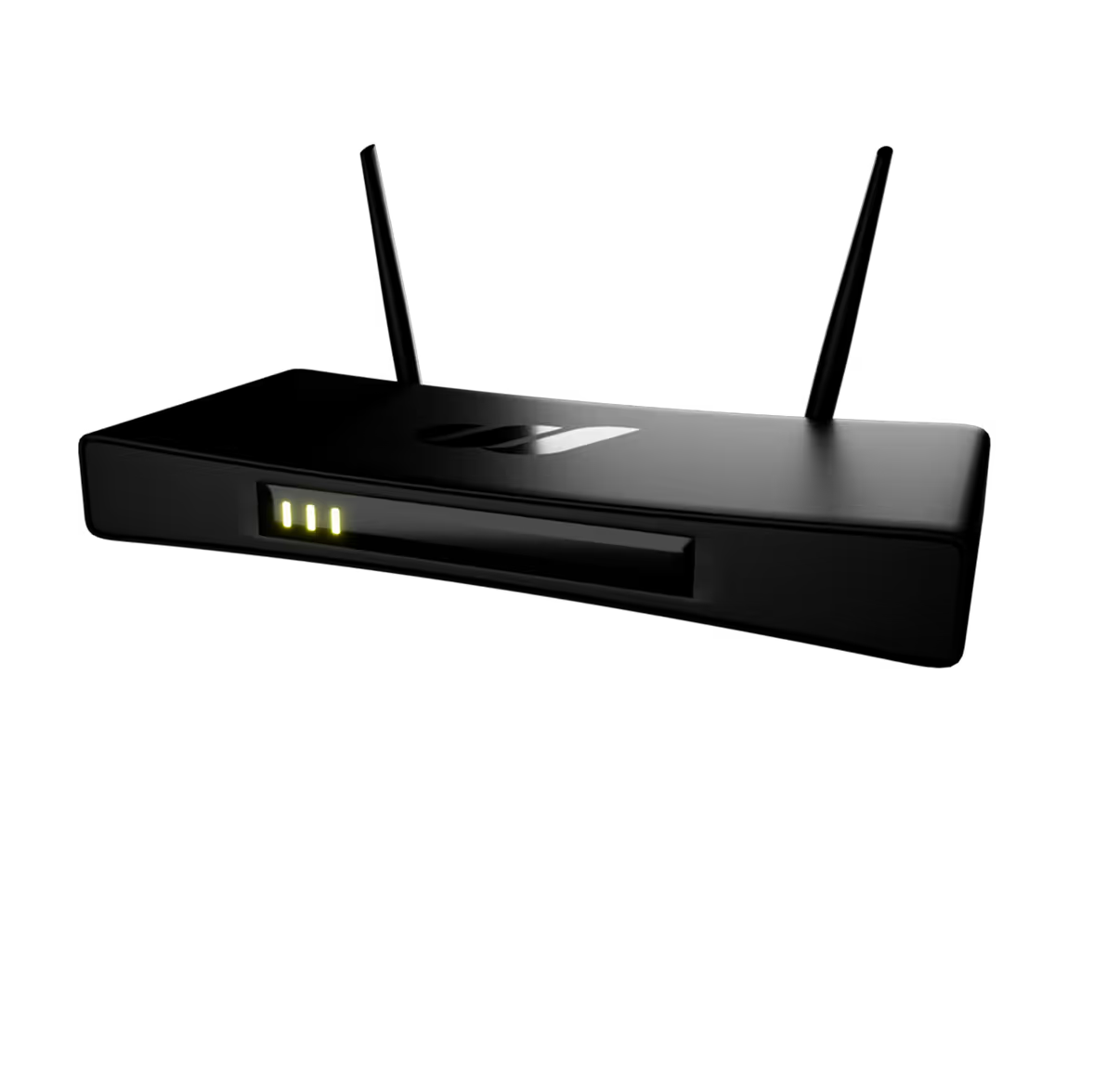
Frontier AirNode
The Frontier AirNode is a Wi-Fi AirNode that powers World Mobile’s commercial rollout in the Philippines, priced from $585 and paying a fixed monthly base reward from $17.55 once its connected customer location goes live.
Frontier sells in drops rather than continuously. Three drops have run so far and all three sold out. Batch One reached its final allocation at 1,177 AirNodes and the next drop has not been announced. The rollout began on the island of Siargao, concentrated around General Luna. Every Frontier AirNode is tied to a real connected customer location and is operated on the ground by Community Wi-Fi Corporation, so you manage it remotely and collect a fixed monthly base reward once that customer service goes active.
Tier pricing shown at 1 to 10 units. Base rewards begin once the connected customer location is active. Figures published by World Mobile and subject to change.
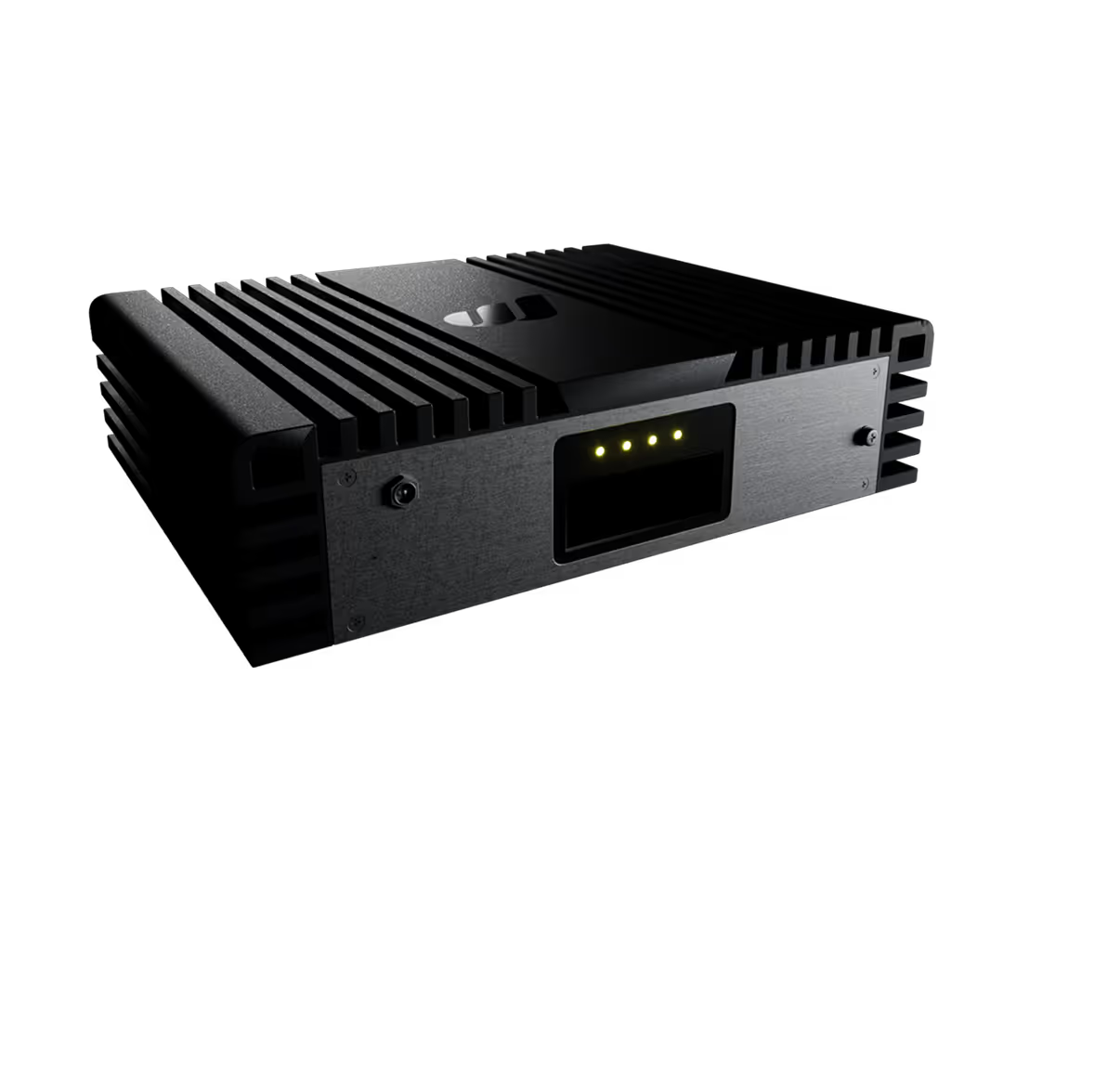
EmberNode
The EmberNode is a $165 fiber distribution gateway installed in street cabinets across Pakistan, and it earns roughly $0.0042 for every gigabyte of verified traffic it carries.
The EmberNode sits between the ISP backbone and everything downstream of it in Pakistan, including Spark AirNode hotspots. It is a ruggedized outdoor unit installed by World Mobile engineers in street cabinets across Lahore, Islamabad, Faisalabad, and Multan. You buy it remotely and earn on verified traffic rather than on a fixed schedule.
Volume pricing: $165 per node for units 1 to 10, $150 for units 11 to 149, $145 for units 150 to 500, applied progressively. Rewards run at roughly $0.0042 per GB carried. World Mobile’s planning benchmark of 800 GB per node per month works out to about $3.33 per node per month. That is a planning average, not a guarantee.
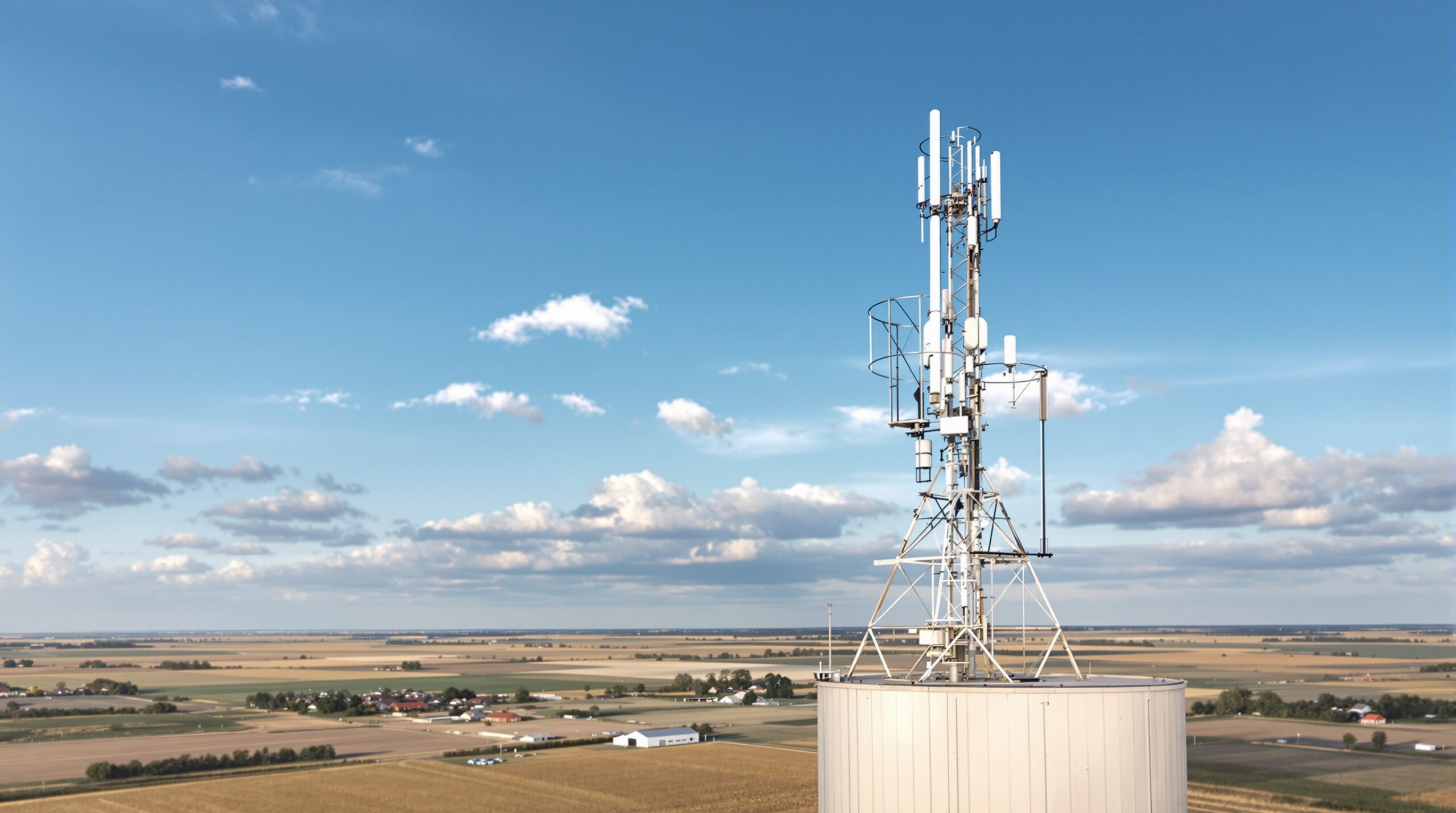
Apex AirNode
The Apex AirNode is a $15,999 long-range broadcast unit with roughly 30 km of line-of-sight range that anchors coverage for an entire region and serves up to 250 Link AirNodes.
Apex units are built to sit on the topographic high points of a region. A single Apex can serve up to 250 Link receivers and backhaul to nearby cellular sites, which makes it the coverage anchor for a whole valley or basin. Batch Two, Drop One brought the first Apex units online in Northern Nevada.
Batch Two, Drop One was a fixed allocation of 5 Apex and 161 Link AirNodes, and World Mobile no longer lists Apex on its public AirNodes page. Check the sales platform for current availability before planning a purchase.
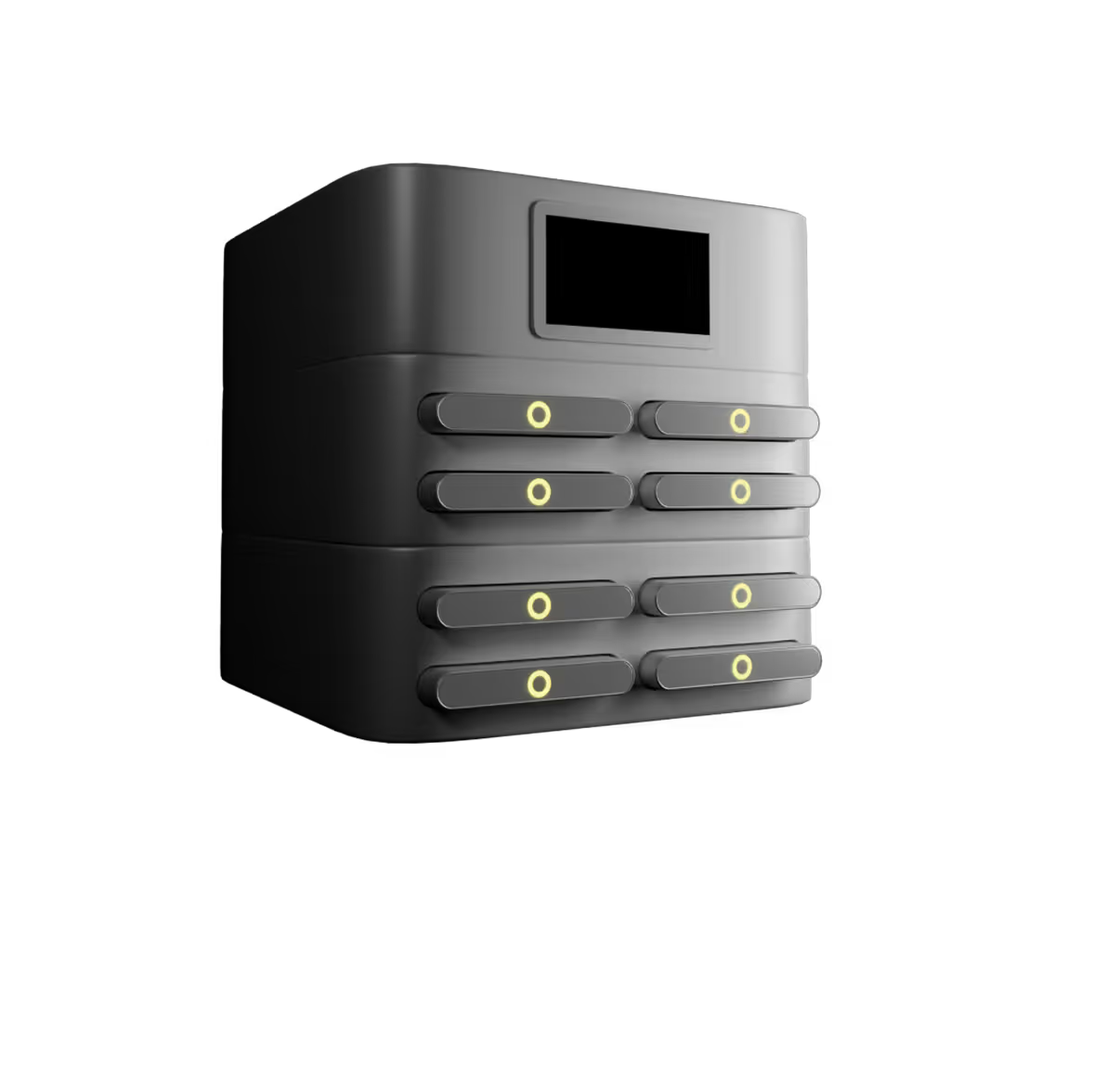
Link AirNode
The Link AirNode is a $749 fixed wireless receiver installed at a home or business inside an Apex AirNode broadcast footprint, earning subscriber-based rewards from the household it connects.
Link is the receiver side of the Apex deployment, delivering high speed connectivity to that subscriber. Because a Link is matched to a real household or business, its rewards track the service that subscriber actually uses. Batch Two, Drop One included 161 Link AirNodes alongside the first 5 Apex units.
Priced at $749, or $699 for operators on the Early Access Whitelist. Batch Two, Drop One was a fixed allocation of 161 Link AirNodes, and World Mobile no longer lists Link on its public AirNodes page. Check the sales platform for current availability.
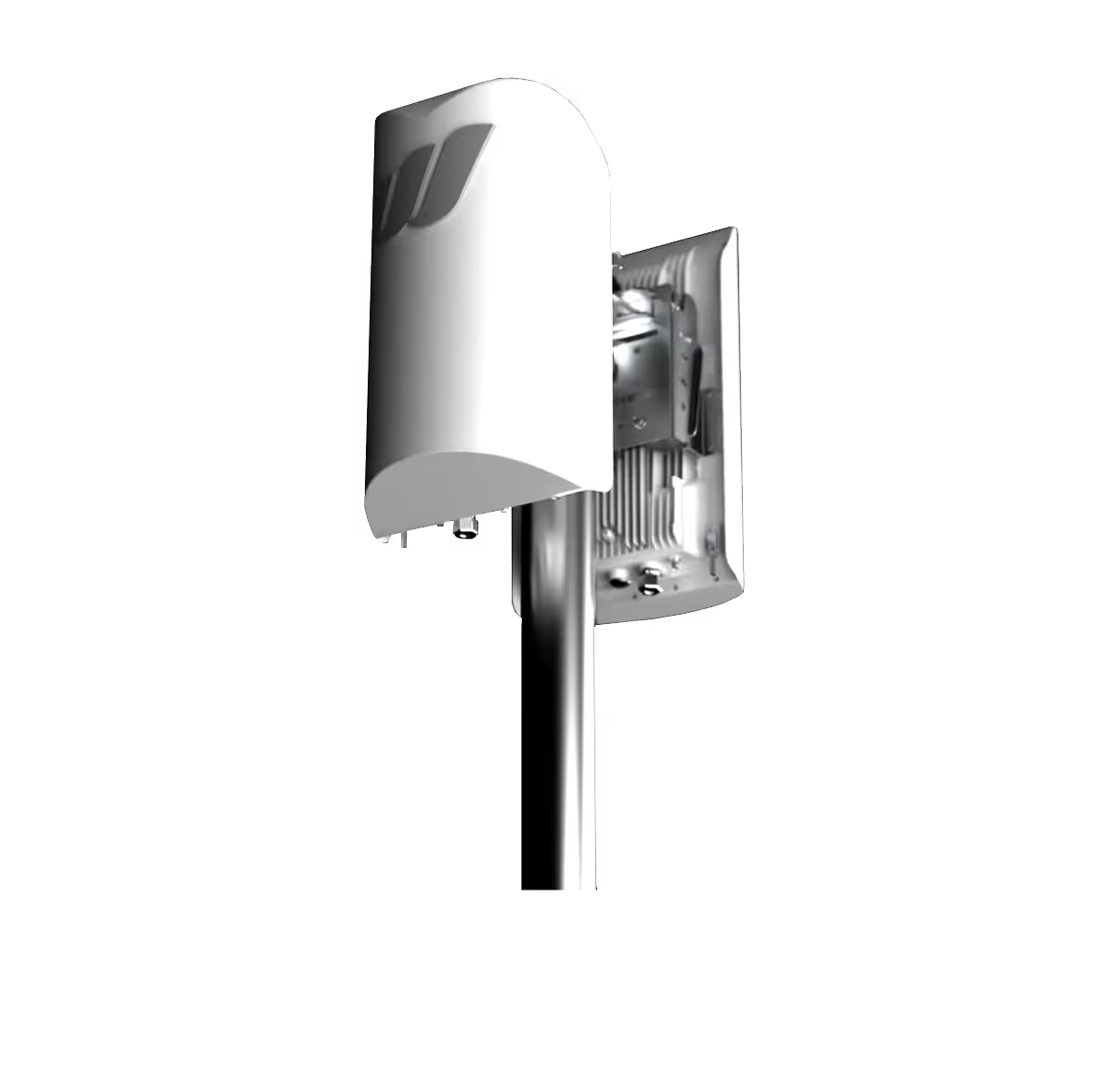
Portal AirNode
The Portal AirNode is a CBRS cellular radio starting at $9,000 that delivers real LTE phone service to smartphones across its coverage area.
Portal is aimed at larger neighbourhoods and businesses that need to scale capacity rather than just extend reach. Portal AirNodes were deployed by Black Hawk helicopter during Hurricane Helene to restore communication in North Carolina. Subscriber based rewards mean your earnings grow as more people connect through your coverage.
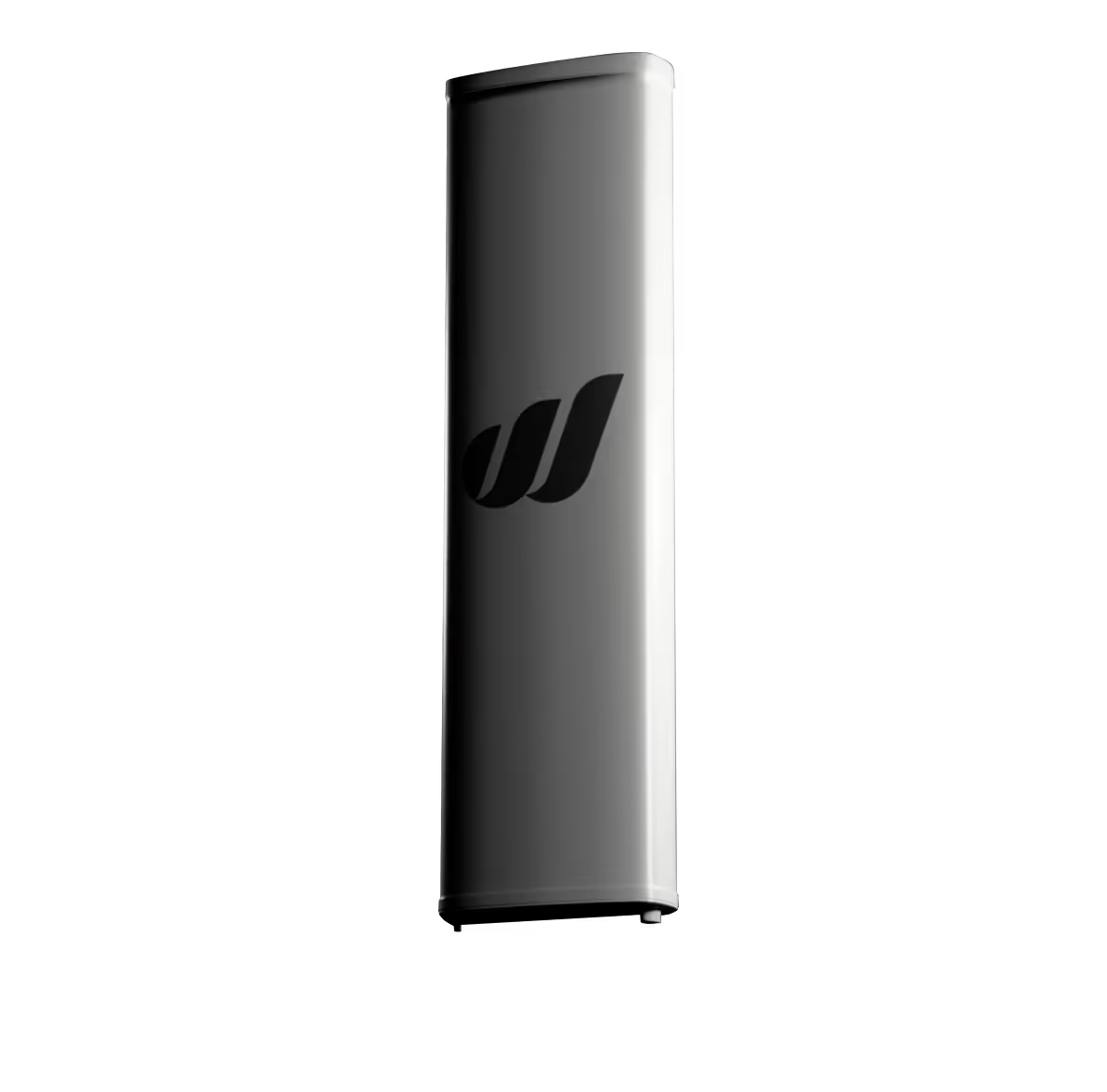
Titan AirNode
The Titan AirNode is an enterprise Band 71 macro base station, the most powerful model in the lineup, priced directly with World Mobile and earning subscriber rewards plus an overwatch bonus.
Titan uses Band 71 (600 MHz) spectrum for multi-kilometer backbone coverage, and it serves as the foundation layer the rest of the network connects through. Titan operators earn both subscriber based rewards and an additional overwatch bonus for maintaining that backbone. World Mobile prices Titan deployments directly with the buyer.
Spark AirNode
The Spark AirNode is a compact Wi-Fi hotspot covering roughly 150 meters that built the Pakistan network, now available to World Mobile distribution partners only.
Spark earns a flat monthly reward on a projected 14 year lifespan. More than 135,000 Sparks have been sold and they account for the bulk of rewards paid to date. Spark is no longer sold to the general public: World Mobile now makes it available to distribution partners only.
Pulse AirNode
The Pulse AirNode is World Mobile’s first energy infrastructure node, repositioned away from its former fixed wireless role, with pricing and specification still to be announced.
Pulse no longer refers to the $749 fixed wireless unit it once did: that role is now the Link AirNode. The energy node opens a different way to participate in the network alongside the connectivity models. Specification, pricing, and availability have not been published yet.
Which World Mobile AirNode Is Right for You?
The right AirNode depends on your budget, location, and goals, and also on what is actually open. The EmberNode at $165 is both the cheapest way in and the one model you can buy on demand today. The Frontier AirNode from $585 is the entry point into the Philippines rollout, but it sells in drops and all three to date have sold out. The Link AirNode at $749 puts you on a real US household. The Apex AirNode at $15,999 anchors coverage for a whole region, and the Portal AirNode and Titan AirNode are for operators building city scale capacity.
| Model | Price | Technology | Region | Rewards |
|---|---|---|---|---|
| Frontier AirNode | $585 – $1,950 | Wi-Fi | Frontier (Philippines) | Fixed Monthly Base |
| EmberNode | $165 | Distribution | Ember (Pakistan) | Traffic Based |
| Apex AirNode | $15,999 | Long Range Broadcast | Pulse (USA) | Subscriber |
| Link AirNode | $749 | Fixed Wireless Receiver | Pulse (USA) | Subscriber |
| Portal AirNode | From $9,000 | Cellular (CBRS) | Pulse (USA) | Subscriber |
| Titan AirNode | Contact Sales | Cellular (Band 71) | Pulse (USA) | Subscriber + Overwatch |
| Spark AirNode | Partner Exclusive | Wi-Fi | Ember (Pakistan) | Flat Monthly |
| Pulse AirNode | TBA | Energy Infrastructure | USA | TBA |
The shaded row is the only model open to buy on demand today. Frontier sells in drops and is between drops; Apex and Link came from a fixed Batch Two allocation. Prices are World Mobile’s published figures and change between drops.
Frontier AirNode SOLD OUT
EmberNode AVAILABLE
Apex AirNode
Link AirNode
Portal AirNode
Titan AirNode
Spark AirNode
Pulse AirNode
How Much Can You Earn From an AirNode Portfolio?
Build your AirNode portfolio by adding multiple models. Set a monthly investment to grow over time, toggle reward reinvestment, and see projected earnings across your entire portfolio.
Important Disclaimer
This calculator is for illustrative purposes only and does not constitute financial advice. Projected returns are estimates based on current APY rates and are not guaranteed. Actual earnings depend on network activity, subscriber count, uptime, market conditions, and other factors that may change without notice. AirNode ownership involves real financial risk, including the possibility of losing the full amount invested. World Mobile’s liability is capped at $100 under their terms of service. Do your own research, consult a qualified financial advisor, and only invest what you can afford to lose.
What Insurance Comes With an AirNode?
Every AirNode purchase includes first-year insurance bundled into the price. After year one, insurance renews at 1.5% of the equipment value annually. You can also use private third-party insurance if you prefer. If you sell your AirNode, the insurance stays with the device.
Bundled Insurance (Year 1 Free)
All AirNode packages include the first year of insurance at no additional cost. This covers the hardware during its initial deployment period.
Renewal examples: Spark ~$1/yr, Portal ~$135/yr, Titan ~$1,500/yr. Renew through the AirNode portal.
10-Year Limited Warranty
AirNodes from authorized distributors include a 10-year limited hardware warranty. If the device fully stops working, it will be repaired locally, replaced, or compensated based on estimated remaining reward value.
Covers manufacturing defects and hardware failure. Professional maintenance teams handle ongoing upkeep.
What Are the Risks of Owning an AirNode?
AirNode ownership is a real infrastructure investment with real risks. Here is what you should know before investing.
- Natural disaster or war: World Mobile’s terms include a force majeure clause. Events like hurricanes, earthquakes, floods, war, and civil unrest may excuse World Mobile from performance obligations. Whether the bundled insurance covers hardware damaged in these events is not publicly specified. Consider supplemental private insurance for high-value deployments.
- Hardware theft or vandalism: AirNodes are physical devices installed at host locations. While professional teams select secure installation sites, theft and vandalism are possible, especially for outdoor cellular models. Review your insurance coverage carefully.
- Regulatory changes: AirNodes operate on licensed spectrum (CBRS, Band 71). Changes in telecom regulations could affect spectrum access and network operations. AirNodes are region-specific and cannot be redeployed to a different country.
- Platform dependency: Your AirNode hardware depends on World Mobile’s network software, management platform, and continued operations to function. If World Mobile were to cease operations, the hardware would have no network to connect to. Earning projections assume continued platform availability.
- Liability cap: World Mobile’s terms cap their total aggregate liability at $100 or one month’s service fee, whichever is less. They are not liable for indirect, incidental, or consequential damages including loss of profits.
- Earnings are not guaranteed: APY projections are estimates based on current network parameters. Actual rewards depend on subscriber count, uptime, data usage, and other factors that change over time. You may earn less than projected or nothing at all.
Do You Need to Buy an AirNode to Participate?
No. You can participate as a Host by providing a physical location for someone else’s AirNode, without purchasing any hardware. There are three roles in the AirNode ecosystem, and each one earns a share of the rewards.

Host
Provide a physical location, like a rooftop or building, for an AirNode. You do not purchase or manage any hardware. A professional team handles everything. You earn a share of rewards just for offering the space.
No Purchase NeededOperator
Purchase and manage an AirNode remotely. You own the hardware but it is installed at someone else’s host location. Everything is managed through your online dashboard. You earn the operator’s share of rewards.
Remote OwnershipHost-Operator
Do both. Own the AirNode and provide the location. This gives you the full share of rewards since there is no split between host and operator. Maximum earnings, complete control.
Maximum RewardsLive in Washington State?
If you are in the Bellingham or greater Washington area, you could offer your rooftop or property as a host location for AirNode deployment. No purchase required, just the space. HexyNodes is building a community powered wireless network in the region and we are looking for host partners.
Sign Up as a Host →When and How Do AirNode Operators Get Paid?
AirNode operators earn rewards based on several factors. After a given month, rewards become claimable 30 days later, with payments arriving within 5 working days.
-
1
Subscriber Activity
The primary driver. More subscribers connecting through your coverage area means higher earnings.
-
2
Uptime and Quality
Consistent uptime and strong connection quality increase your reward multiplier. Extended downtime reduces it.
-
3
Overwatch Bonus (Titan Only)
Titan operators earn an additional percentage for maintaining the Band 71 backbone layer that the entire network relies on.
-
4
Referral Rewards
Recruit other operators and hosts to earn referral bonuses on top of your regular AirNode earnings.
AirNode FAQ
What is an AirNode?
What are the different types of AirNodes?
Which AirNodes can I buy right now?
Do all AirNodes require a host?
How much does an AirNode cost?
Do I need technical skills to operate an AirNode?
How do AirNode operators earn money?
What is the projected return on investment?
Where are AirNodes available?
What is the difference between a Host, Operator, and Host-Operator?
Who installs AirNodes?
Can I buy an AirNode from a different region?
Is there a discount on AirNodes?
Where should I actually buy an AirNode?
What is the Titan’s overwatch bonus?
Were AirNodes used in disaster relief?
What is the Ember AirNode?
How long does an AirNode last?
What insurance comes with an AirNode?
What are the risks of owning an AirNode?
Is there a warranty on AirNodes?
Own Real Infrastructure
Browse available AirNodes, register as a Host, or explore other ways to build with the World Mobile network.
This is not financial advice. Projected returns are estimates and are subject to change. Do your own research before investing.